
TL;DR
- Most OnlyFans like websites fail because they copy surface-level features without building systems that support creator discovery, retention, and long-term monetization.
- Fansly succeeded by focusing on internal discovery, helping creators grow organically instead of relying entirely on external traffic from Reddit, TikTok, or X.
- Multi-tier subscriptions, PPV content, paid messaging, and live-stream monetization increased creator earnings while maximizing revenue per fan.
- Stable payouts, transparent moderation policies, and responsive support strengthened creator trust and reduced platform churn.
- The future belongs to creator platforms that combine discoverability, monetization depth, financial reliability, and creator-first features into one scalable business model.
There’s a graveyard of creator platforms that launched promising to dethrone OnlyFans, yet most quickly faded into irrelevance. The pattern is almost painfully predictable. An entrepreneur sees a massive market, pulls off-the-shelf subscription software, adds a creator-friendly tagline, and waits for the money to follow.
But creator platforms are far more complex than they appear. Real success depends on discovery, trust, monetization depth, and creator loyalty, none of which can be copied with a simple clone script.
That is where Fansly stood apart. Instead of competing only on lower fees or policies, it focused on creator growth and retention.
What Fansly did right that most OnlyFans clones get wrong offers valuable lessons for entrepreneurs building creator platforms today.
Top 6 Things Fansly Did Right That Most OnlyFans Clones Got Wrong
Most OnlyFans clones focused on copying features, while Fansly focused on helping creators grow and earn more. That’s why Fansly scaled faster and built stronger creator loyalty. If you plan to build a site like Fansly, understanding these differences can save you from repeating the same mistakes.
1. Internal Discovery System That Replaced External Traffic Dependence
Walk into any creator community and ask what kills new accounts fastest. The answer is always the same, no one can find them.
One of OnlyFans’ biggest limitations has always been its lack of native discovery. Creators are expected to generate their own traffic through platforms like X, Reddit, TikTok, and other social channels. For new creators without an existing audience, growth becomes extremely difficult. Most OnlyFans clones repeated this exact mistake because building an effective discovery engine requires significant product investment and long-term thinking.
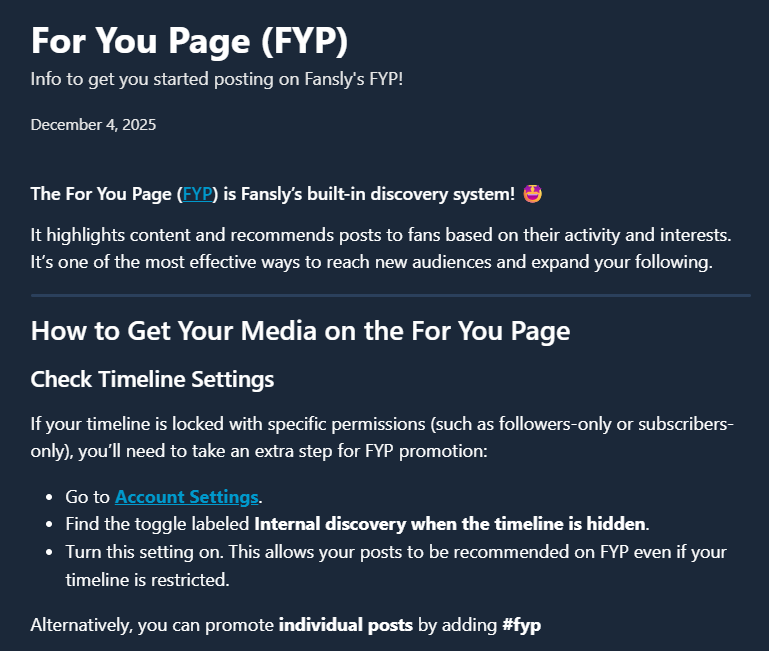
Fansly approached the problem differently. Its “For You” page introduced a feed-based discovery system powered by user behavior and interest signals, helping creators reach relevant audiences organically. Combined with hashtag browsing and category-based discovery, creators in niche segments could gain visibility without relying entirely on external promotion.
From a business standpoint, this changes everything. When creators can grow within the platform itself, loyalty shifts toward the platform driving that growth. Fansly understood this early, while many clone platforms treated discovery as an afterthought.
For entrepreneurs entering this space today, discovery is not an added feature, it is a core growth engine.
2. Multi-Tier Subscription Model That Maximizes Creator Earnings Per Fan
Most OnlyFans clone platforms still rely on a single subscription model, pay one monthly fee and unlock everything. While simple, it also limits how much revenue creators can generate from their audience.
Fansly introduced a more flexible multi-tier subscription system. Creators could offer entry-level plans at lower prices, mid-tier memberships with additional content, and premium tiers that included exclusive perks such as direct messaging, early access, or BTS content. Instead of forcing every fan into the same pricing structure, Fansly allowed creators to monetize different audience segments more effectively.
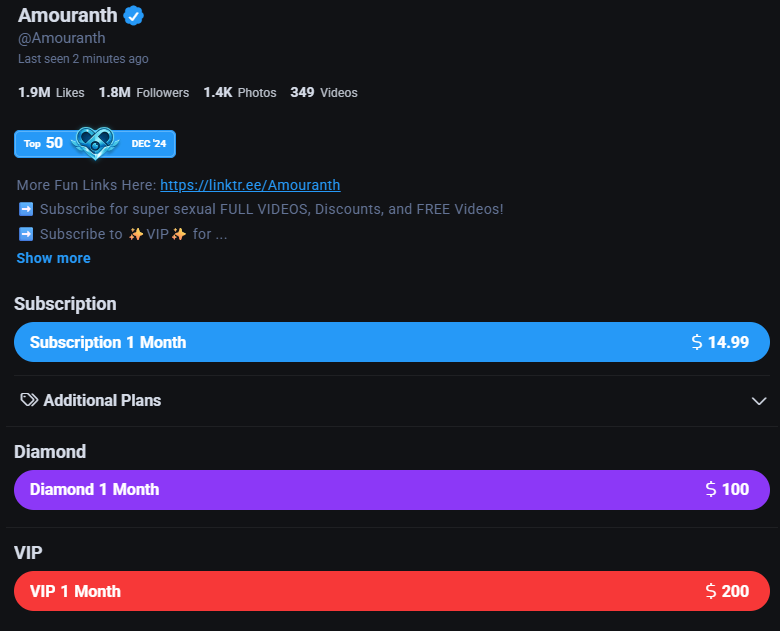
From a business perspective, this significantly increases average revenue per paying user (ARPPU) without requiring additional customer acquisition. A fan upgrading from a $5 tier to a $30 tier generates higher platform revenue without any added marketing cost.
Fansly also strengthened monetization through pay-per-view (PPV) content, allowing creators to sell exclusive posts and messages separately from subscriptions. This created multiple revenue streams from the same subscriber base and increased overall creator earnings.
Most clone platforms still operate with limited monetization flexibility. They may compete on commission rates or platform design, but without deeper earning opportunities, they struggle to retain high-performing creators long term.
3. Content Freedom That Unlocks Creator Growth and Retention
Content freedom is far more than allowing creators to post certain types of content. It directly impacts whether creators can build stable, long-term businesses on a platform.
OnlyFans faced major backlash in 2021 after announcing, and later reversing, a ban on adult content. The incident damaged creator trust and exposed the risks of relying on unclear platform policies. Many creators began exploring alternatives, and Fansly emerged as one of the biggest beneficiaries, not simply because of its policies, but because of its consistency.
Fansly provided creators with clearer moderation guidelines and a more predictable operating environment. That stability allowed creators to plan content strategies, invest in production quality, and grow audiences without constantly worrying about sudden policy changes disrupting their income.
There is also a broader marketplace advantage to supporting multiple content categories. Platforms that accommodate niches such as fitness, cosplay, lifestyle, education, cooking, and adult content naturally attract wider creator and audience segments. Greater diversity creates stronger marketplace activity, increases user retention, and reduces dependence on a single category.
Many clone platforms respond to compliance concerns by implementing overly restrictive moderation policies. While intended to reduce risk, this often limits creator growth and weakens long-term platform value.
The platforms that succeed are typically the ones that balance compliance with flexibility instead of treating restriction as the default strategy.
4. Integrated Monetization Tools That Drive Higher Conversions
One of the biggest mistakes most creator platforms make is limiting monetization to a single subscription payment. Once a fan subscribes, there are often very few additional opportunities for creators to generate revenue.
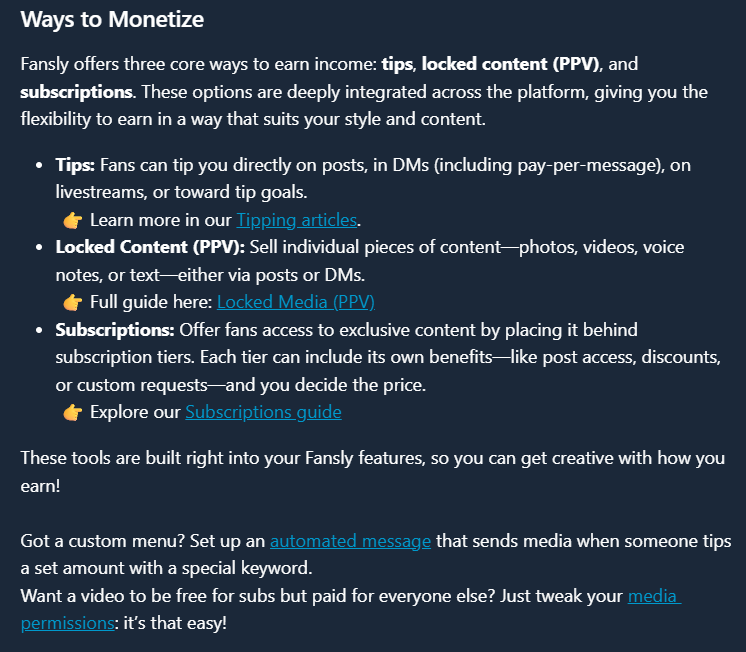
Fansly approached monetization differently by building multiple revenue pathways directly into the platform experience. Features such as paid messaging allowed creators to monetize direct interactions, while locked posts and PPV content created additional purchase opportunities beyond the monthly subscription fee. Instead of relying on one billing event, Fansly enabled creators to generate revenue continuously throughout a fan’s journey on the platform.
The platform expanded this strategy even further through advanced live-streaming features, including ticketed streams, private audience access, stream goals, and Lovense device integration. Live content introduced real-time engagement, which naturally increased fan participation, tipping behavior, and content purchases.
From a business perspective, this strategy is highly effective. The more seamlessly a platform creates purchasing opportunities during user engagement, the higher the average revenue generated per visitor.
Most OnlyFans clone platforms still operate with basic monetization systems focused only on subscriptions and tips. As a result, they leave significant revenue potential untapped while limiting creators’ ability to maximize audience value.
5. Payment Stability and Financial Trust That Powers Creator Migration
Ask most creators what would make them leave a platform they already earn from, and the answer usually comes down to two things: unstable policies or unreliable payments.
This is where many OnlyFans clone platforms struggle the most. They may launch with attractive commission rates and creator-friendly branding, but weak payment infrastructure quickly becomes a major problem. Delayed payouts, inconsistent international payment support, chargeback issues, and poor financial communication create uncertainty for creators who depend on the platform as a primary income source.
Fansly approached payment reliability with far greater operational discipline. The platform operates a 7-day pending period on earnings. It is a fraud detection buffer that protects both creators and the platform from chargebacks and disputed transactions. Once funds clear, they’re processed on a weekly schedule with direct bank deposit as the primary option.
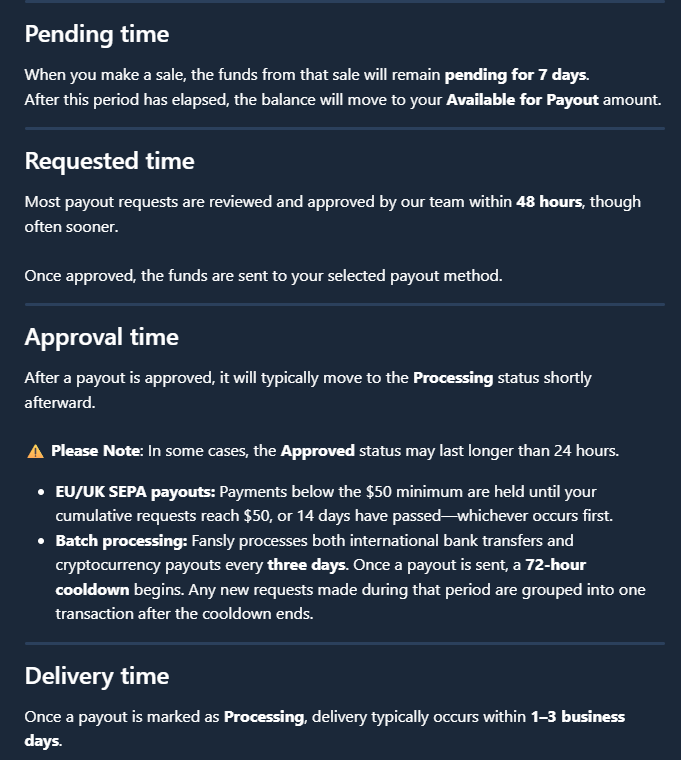
Fansly’s average payout processing time of 1-2 business days compares favorably to OnlyFans’ 3-5 day window, a difference that matters enormously to a creator treating this as their primary income.
For entrepreneurs building competing platforms, the lesson isn’t to copy Fansly’s exact payout schedule. It’s to understand that financial predictability is a retention mechanism, not just an operational detail.
Creators who trust that their money arrives when it’s supposed to will not waste time evaluating alternatives. Those who experience payment uncertainty almost always start hedging, spreading their content across multiple platforms, reducing their investment in the unstable one, and eventually migrating entirely.
A platform’s payment system is its promise to creators. In the adult industry especially, where access to stable adult payment processors is critical, payout failures or processing disruptions can severely damage creator trust. Platforms that establish secure, compliant, and creator-friendly payment systems from the start are far more likely to retain creators and build long-term platform loyalty.
6. Creator Retention Systems That Reduce Churn and Increase Lifetime Value
One of the biggest challenges in the creator economy is retention. Creators rarely leave platforms for a single reason alone. More often, they leave because the platform failed to support them when operational, financial, or compliance issues affected their business.
Fansly approached creator retention as a core platform strategy rather than a basic customer support function. A few specific examples:
Compliance Handling – The adult content space is legally complex, and creators operating within it need a platform that handles compliance proactively like age verification, content documentation, co-star consent forms. When Fansly flags compliance issues, they provide specific documentation requests and timelines rather than cold account suspensions with no explanation. This keeps creators on the platform rather than scrambling to rebuild on a competitor.
Dispute Resolution – Account disputes, content takedowns, and billing issues happen on every platform. What differentiates Fansly is its responsiveness. Creators who receive fast, clear resolutions don’t have time to grow resentful. Those who sit in support queues for weeks while their income is frozen tend to leave and tell others.
Analytics & Creator Tools – Fansly’s enhanced dashboard features rolled out in early 2024, gave creators the ability to track subscriber lifetime value, churn rates, and which specific content was converting best. When creators have data, they make better decisions and grow. When they grow on your platform, they stay.
The business math here is simple, retaining an existing creator costs a fraction of what it takes to acquire and onboard a new one. OnlyFans clone platforms that treat support as an afterthought and analytics as a premium feature are burning creator lifetime value they don’t even know they have.
Final Thoughts
Most OnlyFans clone platforms fail because they focus on copying visible features instead of building systems that help creators grow, monetize effectively, and stay loyal long term. Fansly succeeded by prioritizing discovery, monetization flexibility, creator trust, and retention, not just subscriptions. The biggest lesson for entrepreneurs is simple, creators remain where they can consistently grow their audience and income. Building that kind of platform requires more than a basic clone script. It demands strong monetization systems, reliable payment systems, scalable discovery features, and creator-focused design. Companies like Adent.io, an adult website development company specializing in custom adult web design and OnlyFans-style platform development, help entrepreneurs build scalable creator businesses designed for sustainable long-term growth.
FAQs on Mistakes Most OnlyFans Clones Make
1. What makes a creator platform successful long term?
Successful creator platforms combine audience discovery, strong monetization systems, reliable payments, and creator trust. Platforms that rely only on subscriptions often struggle with creator retention and long-term revenue growth.
2. Can entrepreneurs build profitable OnlyFans-style platforms?
Yes, but success now depends on offering more than basic clone functionality. Modern creator platforms need discovery systems, creator analytics, payment stability, and stronger monetization tools to compete effectively.
3. Why is niche positioning important for OnlyFans clone?
Platforms that target specific creator communities or audience interests often face less competition and can build stronger brand loyalty than generic creator platforms.