

TL;DR
- Adult businesses can legally operate as LLCs in the US with proper state and federal compliance.
- Formation typically involves choosing a state, filing Articles of Organization, and obtaining an EIN.
- Strong privacy, tax planning, and compliance systems (2257, banking, contracts) are essential.
- The adult business registration process typically costs between $500 – $3,500 in the first year for most online adult business LLCs.
- Long-term success depends on maintaining banking access, payment processing relationships, tax compliance, and federal record-keeping requirements, not simply forming the LLC.
Starting an adult business in the US involves more than creating content, launching a website, or attracting customers. Like any legitimate business, it must be structured properly, comply with applicable laws, and meet state and federal requirements.
One of the most common questions entrepreneurs ask is: can one register an adult business as an LLC? The short answer is yes! In most cases, adult businesses can legally operate as Limited Liability Companies (LLCs), provided their activities comply with federal, state, and local laws.
An LLC is often the preferred business structure because it separates personal assets from business liabilities, offers flexible taxation, and can help establish credibility when working with banks, payment processors, vendors, and business partners.
Before beginning the registration process, whether you plan to start an adult website or launch another adult venture, it is important to understand how adult businesses are classified, what legal requirements may apply, and how to properly form an LLC.
What Qualifies as an Adult Business in the United States?
An adult business generally refers to a company that creates, distributes, markets, sells, or hosts adult-oriented products, services, or content intended for adults. The exact legal definition may vary by jurisdiction.
Types of Adult Businesses That Can Be Registered
- Adult Content Platforms – Websites or apps that host, distribute, or monetize explicit video, photo, or written content. Examples include adult membership sites and clip stores.
- Subscription Creator Businesses – Individual creators or porn studios operating subscription-based fan platforms like that of OnlyFans where adult content is sold directly to paying subscribers.
- Webcam Businesses – Companies operating live performance platforms where performers interact with paying viewers in real time.
- Adult E-Commerce Stores – Online retailers selling adult toys, novelties, lingerie, or sexual wellness products.
- Adult Entertainment Agencies – Businesses that represent, book, or manage performers for legal adult content productions.
- Adult Dating Platforms -Websites or apps connecting adults for dating or companionship, including sugar dating and fetish community platforms.
- Adult SaaS and Technology Companies – Software companies building tools specifically for the adult industry like age verification systems, content management platforms, billing software, or affiliate networks.
All of these business types can be legally registered in the US through a compliant adult business legal registration process.
How to Register an Adult Business as an LLC in the US?
To register an adult business as an LLC in the US, you’ll need to complete several legal and administrative steps required by your state. Following the process correctly helps establish your business legally, maintain compliance, and build a strong foundation for future growth.
Step 1: Choose a Compliant Name for Your Adult Business
Your LLC name is the first official decision you make, and it must clear two filters – state naming rules and practical business strategy.
State naming rules every adult LLC must follow:
- The name must be unique within the state where you are registering, not identical or deceptively similar to an existing registered business
- It must include an LLC designator: “LLC,” “L.L.C.,” or “Limited Liability Company”
- Restricted words such as “Bank,” “Insurance,” “Trust,” or “Federal” require additional licensing or government approval and should be avoided unless you have that approval.
The strategic naming consideration for adult businesses:
Many adult entrepreneurs register their LLC under a neutral, non-descriptive business name, for example, “Pacific Digital Media LLC” rather than anything that references adult content. This matters for two practical reasons, first, it reduces friction when opening business bank accounts, and second, it avoids triggering automatic rejections from financial institutions that screen business names.
You can then operate your actual brand as a DBA (Doing Business As), which is a trade name registered separately at the state or county level. Your legal LLC entity and your public-facing brand do not have to be the same name.
Before filing, verify your chosen name is available using your state’s Secretary of State business name search. Most states offer free online search tools.
Step 2: Select the Right State to Register Your LLC
You don’t have to register your LLC in your home state. For adult businesses, this flexibility is especially valuable because certain states offer stronger privacy, tax advantages, and legal protections.
- Wyoming – Wyoming is a leading choice for online adult businesses due to its strong privacy laws, zero state income tax, and low costs ($100 filing, ~$60 annual fee). It does not require member or owner names on public filings, making it ideal for content platforms, creator subscription services, webcam businesses, and adult SaaS. It also offers fast approvals, often within a day.
- Delaware – Delaware is best suited for businesses planning to raise capital or build multi-owner structures. It offers strong legal clarity through its Court of Chancery and keeps member details off public records. While more expensive ($90 filing, $300 annual report), it’s highly trusted by investors and scalable ventures.
- Nevada – Nevada provides strong asset protection and privacy, with no state income tax and robust safeguards against personal creditors. Annual costs are higher (~$350), but its legal structure is attractive for higher-risk or asset-heavy operations.
- Home State Rule – If your business has a physical presence such as a studio, staff, or operations, you may still need to register as a foreign LLC in your home state, even if formed elsewhere. Purely online businesses typically avoid this complexity and can operate entirely from the chosen state.
Step 3: Appoint a Registered Agent
Every LLC in the US must designate a registered agent, an individual or business entity authorized to receive legal correspondence, lawsuits, tax notices, and official government documents on behalf of your LLC. This is a legal requirement in all 50 states, not optional.
Requirements:
- The registered agent must have a physical street address (not a P.O. box) in the state where your LLC is formed.
- They must be available during normal business hours to receive documents
For adult businesses, using a professional registered agent service is strongly recommended. Because your registered agent’s address is listed on public LLC records, so using a service helps keep your personal home address fully private.
Professional registered agent services cost $50 – $300 per year. Reputable options include Northwest Registered Agent, Incfile, and ZenBusiness.
Step 4: File Your Articles of Organization
The Articles of Organization is the document that legally creates your LLC. You file it with the Secretary of State’s office (or equivalent agency) in your chosen state. Once approved, your LLC exists as a legal entity.
What the Articles of Organization typically requires:
- Your LLC’s full legal name (with the LLC designator)
- The principal business address
- The registered agent’s name and physical address
- Management structure, whether the LLC is member-managed (owners run the business directly) or manager-managed (a designated manager runs the business, who may or may not be an owner)
- Organizer signature, the person filing the document
📝Note: In Wyoming and Delaware, member names are not required on this document. In states where they are required, they become part of the public record.
How to file: Most states allow online filing through the Secretary of State’s website. Some still accept mail filings. Online filing is always faster and is the standard method.
Step 5: Obtain an EIN from the IRS
An Employer Identification Number (EIN) is a federal tax ID issued by the IRS. It functions like a Social Security Number for your business and is required for most operational and financial activities. It is free and can be obtained online in just a few minutes.
Why every adult business LLC needs an EIN:
- Required to open a business bank account
- Essential for payment processors and high-risk merchant accounts
- Helps keep your personal Social Security Number (SSN) off business filings, improving privacy
- Required when hiring employees or working with contractors (performers, editors, developers)
- Needed for most affiliate networks and platform partnerships
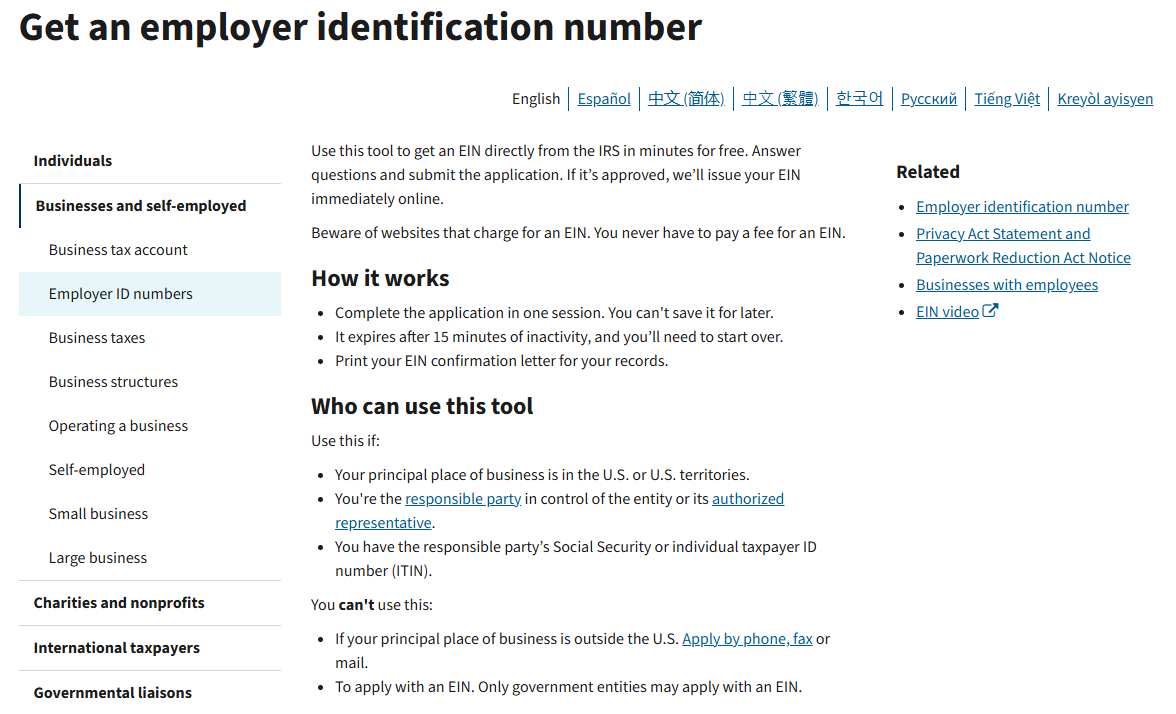
Even if you are the sole owner with no employees, an EIN is strongly recommended. Most banks and adult-industry payment processors require it during onboarding and risk checks. Apply free at the IRS EIN Online Application. You receive your EIN immediately upon completion.
Step 6: Draft an LLC Operating Agreement
An Operating Agreement is an internal document that defines how your LLC is owned, managed, and operated. Most states don’t require it for formation, but for adult businesses, it’s one of the most important legal safeguards you can put in place.
Why it matters:
Without an operating agreement, your LLC operates under your state’s default rules, which are generic and may not reflect your intentions at all. Courts also use the presence of a formal operating agreement as evidence that your LLC is genuinely separate from you personally, strengthening your liability protection.
Key provisions an adult business operating agreement should include:
- Ownership Structure – Member names (kept private from public records), ownership percentages, and initial capital contributions.
- Profit Distributions – How and when profits are distributed to members.
- Management Authority – Who has the authority to approve content, sign platform agreements, enter performer contracts, or commit the business to financial obligations.
- Confidentiality Clauses – Internal non-disclosure provisions for business operations, talent relationships, and proprietary content strategies.
- Performer & Contractor Relationships – Clear separation between LLC members and independent contractors.
- Content Compliance Delegation – Assignment of duties such as age verification and 2257 record-keeping.
- Exit & Buyout Terms – Rules for ownership transfer, resignation, or sale of interest.
- Dissolution Process – Steps for winding down the business, including record retention and final obligations.
Basic templates are available from legal resources and some state websites. However, for adult businesses, where privacy, compliance, and contractor relationships are critical, it is strongly recommended to have an attorney draft or review the agreement.
Typical legal cost ranges from $300 – $1,500+, depending on complexity and structure.
Step 7: Register for State and Local Taxes
Once your LLC is active and your EIN is issued, determine your state and local tax obligations.
Sales Tax – If your adult business sells physical products such as adult toys, merchandise, novelties, you need a sales tax permit from your state’s Department of Revenue. Some states also tax digital products and downloads; this varies by state and has been evolving rapidly, so check current rules in each state where you have customers.
State Income or Franchise Taxes – Several states (Wyoming, Nevada, Florida, Texas) have no state income tax, which is one reason they attract adult businesses. Other states charge annual franchise taxes or minimum business taxes regardless of revenue.
Register for applicable state taxes through your state’s Department of Revenue or Taxation website.
Step 8: Obtain a Business Bank Account
A dedicated business bank account is non-negotiable. Mixing personal and business finances is the fastest way to undermine your LLC’s liability protection. A court can disregard your LLC structure (called “piercing the corporate veil”) if you treat business and personal money as interchangeable.
Documents required to open a business bank account:
- Articles of Organization (the stamped, approved copy from the state)
- EIN confirmation letter from the IRS
- Operating Agreement
- Government-issued personal ID
Adult industry banking reality:
Adult businesses are often categorized as high-risk, which means some traditional banks may:
- Refuse account opening applications
- Restrict payment activity
- Close accounts after reviewing transaction patterns or business type
This is not unusual in the industry and should be planned for in advance.
Practical approach:
When applying, use your legal LLC name and ensure your business appears professionally structured. Having clear compliance processes such as age verification systems, 2257 record-keeping, and formal contractor agreements. It can significantly improve approval chances with financial institutions.
Regional banks and credit unions are often more flexible than large national banks. In some cases, adult businesses also explore online-first banking platforms such as Relay, which may offer more accessibility than traditional institutions. However, approval is never guaranteed and depends on individual risk assessment, underwriting standards, and compliance review.
How Much Does It Cost to Register an Adult Business as an LLC in the US?
Registering an adult business as an LLC involves several mandatory and optional expenses that vary based on state, structure, and compliance needs. Below is a realistic breakdown of expected costs.
- LLC Formation Costs – State filing fees range from $75 (Nevada) to $90 (Delaware) to $100 (Wyoming) for the Articles of Organization. In total, expect to pay $75 – $200 in state fees depending on your state of choice.
- Registered Agent Fees – Professional registered agent services cost $50 – $300 per year. Some formation services include the first year free.
- Operating Agreement – DIY templates are available, but having an attorney draft one for an adult business costs $300 – $1,500 depending on complexity.
- Licensing and Permit Expenses – Local business licenses cost around $50 – $500. Adult entertainment permits (for physical venues) vary widely from $500 to several thousand dollars annually in some jurisdictions.
- Compliance and Legal Costs – Setting up 2257-compliant record-keeping systems and having an attorney review content policies typically costs $500 to $2,500 initially, with ongoing compliance costs depending on your business model.
For most online-only adult businesses, the total first-year setup cost generally falls between $500 – $3,500, depending on the chosen state, legal assistance, and operational structure.
Final Thoughts
Forming an adult business as an LLC in the US is legally straightforward but operationally compliance-heavy. While state formation is simple and low-cost, long-term success depends on regulatory adherence, tax registration, banking access, and federal requirements like 18 U.S.C. § 2257. Privacy structuring, registered agents, and proper operating agreements strengthen liability protection. However, the real challenge lies in maintaining banking relationships and platform compliance. Overall, it is a viable structure for online adult businesses when built with proper legal and financial safeguards from the start.
FAQs on Adult Business LLC Registration in the US
1. Which US states are best for forming an adult business LLC?
Wyoming, Delaware, & Nevada are commonly preferred due to privacy protections, low taxes, and flexible corporate structures. Each state offers different advantages based on anonymity needs, funding plans, and long-term scalability.
2. What is the biggest challenge for adult LLCs in the US?
The main challenge is not formation but maintaining financial systems. Many US banks and payment processors classify adult businesses as high-risk, making banking access, compliance documentation, and ongoing transparency critical for long-term stability.
3. Can foreign founders register an adult LLC in the US?
Yes, non-US residents can form LLCs in states like Wyoming or Delaware. However, they may need an ITIN or EIN and must comply with US banking, tax reporting, and identity verification requirements.