
TL;DR
- Consistent character personalities, contextual memory, emotional awareness, and conversation variety are essential to make an AI flirting app feel personal rather than scripted.
- Define the use case, design characters, select AI models, build memory and chat, and then add multimodal features, retention, safety, monetization, and MVP validation.
- Building an AI flirting app typically costs $40k – $150k+ for development, while ongoing expenses can start at $1,500 – $5,000+/month and rise with conversation volume, voice and image usage, moderation, and user growth.
- Adent.io can help build an AI flirting app with conversational AI, character personalization, memory, multimodal features, monetization, and post-launch development support.
AI companionship is moving beyond experimentation into measurable consumer behavior. A 2026 survey found that 27% of US internet users had used AI for social interaction, including conversations around connection, confidence, or trust.
Meanwhile, a 2026 longitudinal study of 182,451 lines of human-AI conversation found that general-purpose chatbots engaged in roughly twice as much self-disclosure as users, pointing to the growing relational nature of AI interactions.
For founders looking to build an AI flirting app, the market is promising, but increasingly competitive and scrutinized. AI companion apps surpassed 220M cumulative downloads by July 2025, while first-half downloads grew 88% year over year.
This guide on how to build an AI flirting app covers the product mechanics behind retention, the 10-step development process, and the costs to consider before committing capital.
What Makes an AI Flirting App Actually Addictive to Use?
An AI flirting app becomes engaging when conversations feel personal, unpredictable, and emotionally in tune. The real retention advantage comes from how well the AI remembers, adapts, and keeps each interaction fresh.
I. Consistent AI Personality
Users build familiarity with the character, not the underlying model. A character that suddenly changes its tone, vocabulary, values, or flirting style breaks that experience.
Define a clear character profile covering personality, backstory, interests, speech patterns, emotional range, flirting boundaries, and behavioral rules. Reinforce it through system instructions, examples, structured outputs, and ongoing conversation testing.
The personality should stay recognizable, while the conversations continue to feel spontaneous.
II. Contextual Memory
Memory is one of the strongest differentiators when you build an AI flirting app. The AI should remember useful details, interests, preferences, recurring jokes, important events, and previous topics, without storing every interaction indefinitely.
A practical approach separates session context, recent history, and long-term memories, retrieving only what is relevant to the current conversation.
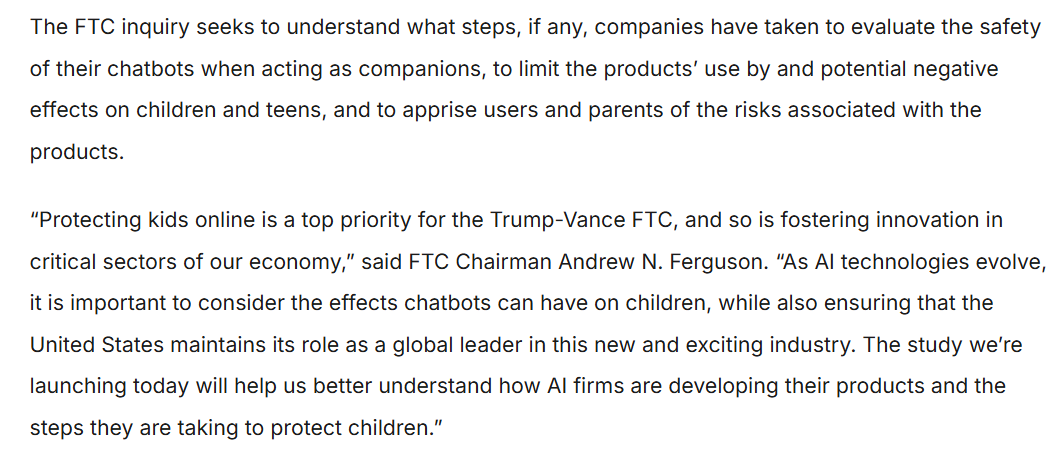
Privacy matters here too; the FTC’s inquiry into AI companion products specifically examines how companion apps handle user data, character development, monetization, and potential harms.
III. Emotionally Intelligent Responses
Good flirting depends on reading the room. A playful message should not receive the same response as a user expressing frustration, loneliness, or discomfort.
When building an AI flirting app, use intent and emotional-state signals to help the model adjust tone, pacing, humor, and romantic intensity. Just as importantly, define when the AI should not flirt, particularly when users signal discomfort or discuss sensitive situations.
IV. Conversation Variety
Repetition is one of the fastest ways to expose an AI flirting app as a template-driven product. Variation should exist at several levels:
- Opening lines and conversation starters
- Questions and follow-ups
- Humor and compliments
- Response length
- Topic transitions
- Conversation pacing
- Character reactions
- Scenario selection
Product teams should test conversations systematically rather than relying on a handful of manual examples. Evaluate whether the same user receives repetitive phrases, or characters remain consistent over long sessions, or conversations naturally progress instead of looping.
V. Multimodal Interaction
Text can establish the relationship, but voice and visual features can make an AI flirting app experience considerably more engaging.
Depending on the product, multimodal features can include:
- AI voice messages
- Real-time voice conversations
- Character images
- Animated avatars
- Voice input
- Visual conversation prompts
Do not add multimodal features simply because they are technically possible. Measure whether they improve retention, session frequency, or paid conversion.
They also introduce additional risks around impersonation, sexual content, non-consensual imagery, and minors, making moderation part of the feature design rather than an afterthought.
VI. Healthy Engagement Loops
Retention matters, but AI flirting app development needs a more careful approach to engagement.
Notifications, streaks, personalized prompts, and character updates can bring users back, but tactics that deliberately trigger guilt, abandonment fears, or emotional dependence can damage the product and create regulatory risk.
California’s SB 243, effective January 1, 2026, introduced specific requirements for companion chatbots, including AI disclosure, self-harm safeguards, and protections for known minor users.
A better retention strategy is to give users a reason to come back. That means better memory, fresh conversations, evolving characters, useful personalization, and notification controls.
How to Build an AI Flirting App?
Building an AI flirting app requires the right balance of AI capabilities, personalization, conversation design, retention, and safety. Here are the 10 key development steps to build it effectively and scale it sustainably.
1. Define the Target Audience and Flirting Use Case
Before you build an AI flirting app, decide exactly what kind of interaction you are selling. The category already spans AI girlfriends & boyfriends, romantic role-play, fantasy characters, companionship, and even dating-confidence use cases.
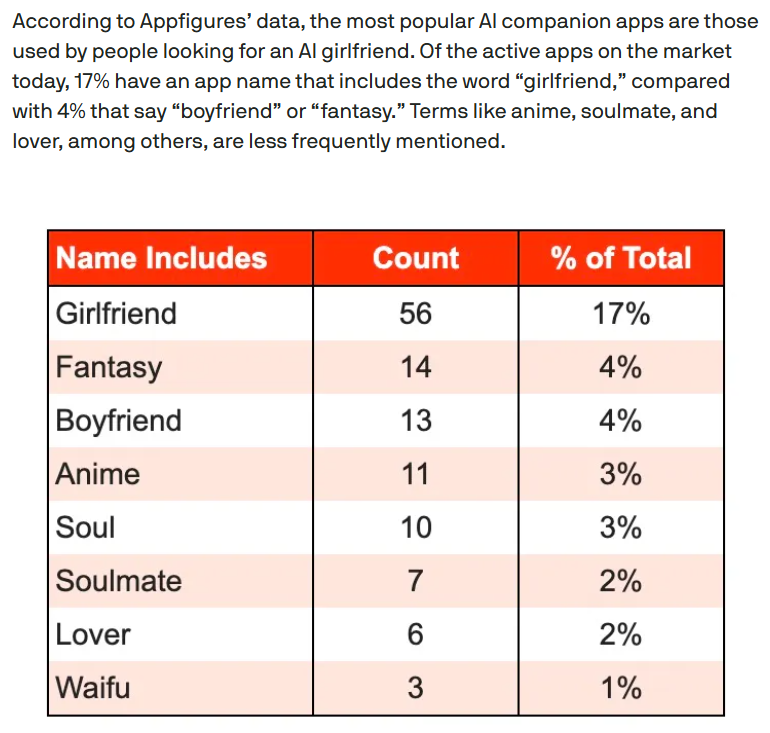
Appfigures data reported by TechCrunch shows that 17% of active AI companion apps had “girlfriend” in their name, making the romantic-companion segment particularly crowded.
That means “an AI that flirts” is not enough of a positioning strategy. Pick a specific use case, such as:
- Casual Flirting: Playful banter, compliments, and short conversations.
- Virtual Romance: An ongoing AI partner with memory and relationship progression.
- Role-Play: Character-driven scenarios with defined personalities.
- Dating Practice: Helping users build confidence, practice conversations, or improve flirting skills.
- Personalized Companionship: A character that adapts to the user’s interests and communication style.
Then define the age group, target market, character preferences, conversation depth, content boundaries, and expected session frequency. These choices directly affect your AI model, memory requirements, moderation, voice features, and pricing.
2. Design the Character & Conversation Rules
Once the use case is clear, design the character before tuning the AI model. In an AI flirting app, the character is the product users actually experience.
Define the character at a practical level:
- Personality: Confident, playful, witty, reserved, affectionate, etc.
- Voice: Vocabulary, sentence length, humor, slang, emojis, and conversational rhythm.
- Backstory: Interests, lifestyle, preferences, and details that give the character consistency.
- Flirting Style: Subtle teasing, compliments, playful banter, or more direct romantic conversation.
- Conversation Boundaries: Topics the character can discuss, how it handles rejection, and when it should stop or change tone.
- Relationship Progression: How the interaction changes as the user moves from first conversation to familiarity and deeper connection.
Then turn these decisions into clear conversation rules covering ambiguity, sensitive topics, repeated questions, emotional situations, and conflicting instructions.
The key is consistency without making the character predictable. Users should recognize the same personality across conversations, while the dialogue still feels spontaneous.
For founders building an AI flirting app, this character layer is worth treating as a core product asset, not just a prompt. A well-defined persona can later be tested, refined, and reused across text, voice, and other interaction modes.
3. Choose Your AI Model
For building an AI flirting app, model selection should come down to conversation quality, latency, context handling, multimodal support, and cost. There is no need to commit to one model across every interaction.
A practical approach is to test two or three models against real use cases, comparing flirting quality, character consistency, instruction following, memory recall, response speed, and safety handling. Current APIs offer models at different capability and price points, so routine conversations do not necessarily need the most expensive option.
If your product includes voice, images, or long conversation histories, evaluate those capabilities separately rather than assuming your primary text model can handle them well.
Most importantly, treat model selection as an ongoing product decision. Benchmark real conversations, track cost per active user and response latency, and revisit your model mix as usage, requirements, and pricing change.
4. Build the Memory & Personalization Layer
Memory is what makes building an AI flirting app different from building another chatbot. If users have to reintroduce themselves every time they return, the sense of continuity quickly disappears.
The practical approach is to separate memory into three layers:
- Current Conversation: What is being discussed in the active session.
- Recent Interaction History: Recent conversations, recurring topics, jokes, preferences, and relationship milestones that may influence the next interaction.
- Long-Term User Preferences: Stable details such as interests, communication style, favorite topics, important dates, and character preferences.
A retrieval system can then surface only the memories relevant to the current exchange rather than sending the entire conversation history back to the model.
Personalization should also be selective because remembering everything does not necessarily make an AI flirting app feel more personal; remembering the details that naturally fit the conversation does.
5. Develop the Chat Experience
The chat experience is where your AI flirting app earns repeat engagement, so it must feel responsive, natural, and effortless. Prioritize conversation flow, response speed, personalization, and the right multimodal features rather than simply adding more chat functionality.
Keep onboarding lightweight, allowing users to select a character, set preferences, and start chatting quickly.
Support streaming responses, typing indicators, quick replies, reactions, conversation history, and easy character controls. In flirting-focused conversations, latency can disrupt the emotional flow, making response speed especially important.
Add voice messages, images, emojis, message regeneration, and conversation starters where they genuinely improve the interaction. The goal is not to make the chat interface feature-heavy, but to make every exchange feel fluid enough that users want to continue the conversation.
6. Add Voice, Image, and Other Multimodal Features
Once the core chat experience works, multimodal features can make an AI flirting app feel more personal and interactive. Voice adds context through tone and delivery, while character images, animated avatars, image sharing, and voice input can deepen engagement.
The important part is choosing features that genuinely improve the experience. Voice can suit longer conversations, while images and avatars may work better as occasional interaction points.
Real-time voice can create more natural exchanges but requires low latency and reliable session management.
Multimodal interactions should connect with the personalization layer, allowing characters to maintain context across text, voice, and images. Give users clear controls over generated, shared, and saved media.
These features affect your AI flirting app development cost through speech-to-text, text-to-speech, image generation, and real-time processing. Track their impact on engagement, retention, and paid conversion before scaling them.
7. Build the Engagement and Retention System
An AI flirting app needs more than engaging conversations to keep users coming back. Retention should be driven by the evolving relationship experience rather than an endless stream of notifications.
Personalized conversation starters, character updates, new scenarios, optional reminders, and relationship milestones can encourage repeat visits without making the experience repetitive. Use onboarding data and conversation history to personalize the home screen and interactions.
Track D1, D7, and D30 retention, session length, conversations per user, return frequency, notification engagement, and paid conversion. These metrics show whether users are returning because they value the experience or simply responding to notifications.
8. Implement Safety, Moderation, and Age Controls
For an AI flirting app, safety cannot be treated as a compliance layer added after the product is built. Romantic and sexually suggestive conversations create edge cases around minors, harassment, exploitation, self-harm, impersonation, and prohibited content that need explicit product rules.
Use input & output moderation, age assurance, reporting and blocking, rate limits, and human review for high-risk cases. Keep moderation separate from the core model so a single model failure does not become a product-level failure.
Age assurance needs particular attention if mature interactions are allowed. A date-of-birth field alone may not be enough; the level of verification should reflect your target markets, user risk, and content policy.
Character behavior also needs defined boundaries. Decide what the AI can engage with, when it must refuse, and how it should redirect sensitive conversations. These rules should be consistent across text, voice, and image interactions.
9. Monetize Your AI Flirting App
The monetization model should reflect how users consume the product and what actually drives your AI costs.
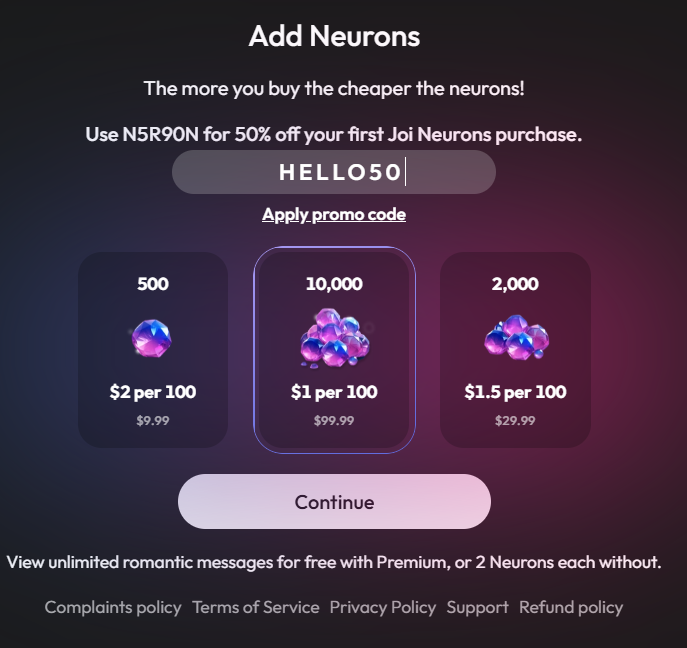
- Usage-Based Credits: Credits work well when interactions have variable AI costs, such as image generation, voice conversations, or high-volume messaging. Usage-based billing lets pricing track actual consumption.
- Subscriptions: Offer monthly or annual plans for users who chat frequently. You can structure tiers around message limits, premium characters, voice access, or other higher-value features.
- Premium Characters & Features: Keep basic conversations accessible while charging for exclusive characters, advanced personalities, voice, images, or other premium experiences.
- Keep the Free Tier Useful: Give users enough access to experience the product’s value before asking them to upgrade. A paywall that appears too early can hurt both engagement and conversions.
- Affiliate Revenue: Introduce third-party recommendations that genuinely complement the user experience and generate commission from qualifying actions. Keep these placements relevant, transparent, and separate from the core conversation.
Always experiment with plans, trials, credits, and feature bundles rather than treating the first pricing structure as final. Subscription platforms such as RevenueCat support products, trials, offers, and paywall experiments.
10. Launch an MVP of Your AI Flirting App
Do not launch every character, voice mode, image feature, and monetization option at once. A focused MVP helps you validate whether users actually want the experience before you invest further.
For the first release, prioritize the core character, reliable chat, basic memory, onboarding, moderation, age controls, analytics, and one clear monetization path. Add voice, images, multiple characters, and advanced relationship features once you have evidence of repeat usage.
Your MVP should answer a few commercial questions:
- Are users completing conversations?
- Do they return without constant reminders?
- Which characters drive the strongest retention?
- What does each active user cost to serve?
- Will users pay for a deeper experience?
Once you have these answers, you can prioritize the features that are most likely to create business value rather than simply making the AI flirting app bigger.
How Much Does It Cost to Build an AI Flirting App?
The cost to build an AI flirting app typically falls between $40,000 – $150,000+, depending on the level of AI personalization, character design, memory, and platform complexity.
| App Scope | Estimated Cost |
| Basic MVP | $40k – $60k |
| Mid-Level AI Flirting App | $70k – $100k |
| Advanced Platform | $120k – $150k+ |
The budget moves up when you add multiple characters, deeper memory, voice, image generation, real-time conversations, and more sophisticated relationship mechanics.
Ongoing Costs of Running an AI Flirting App
Ongoing costs can start around $1,500 – $5,000/month for an early-stage MVP and reach $10,000 – $30,000+/month as active users and AI usage increase.
| Ongoing Expense | Early Stage Estimate/Month |
| Cloud hosting & databases | $200 – $1000 |
| AI text/API usage | $300 – $2000+ |
| Voice &image generation | $200 – $2000+ |
| Storage, CDN, & media delivery | $100 – $500 |
| Moderation & safety tools | $100 – $1000+ |
| Analytics, notification, & third-party APIs | $100 – $500 |
| Maintenance & technical support | $1000 – $3000+ |
| Approx. total | $1500 – $5000+ |
These are planning ranges rather than fixed prices because AI usage is the variable that can change the monthly bill most dramatically.
Subscription tooling is another relatively small but recurring expense. RevenueCat currently has no charge up to $2,500 in monthly tracked revenue, then charges 1% of tracked revenue above that threshold.
The key budgeting decision is therefore not simply how much the AI flirting app costs to build, but how much each active user costs you to serve.
📌Pro Tip: Before committing capital, explore our expert guide to NSFW AI chatbot development costs to understand where your budget goes and which features drive spending.
Final Thoughts
Building an AI flirting app is ultimately about creating an experience users want to return to, not simply connecting a language model to a chat interface. Character consistency, memory, personalization, multimodal interaction, retention, safety, and sustainable monetization all need to work together. Start with a focused MVP, measure real user behavior, and scale the features that demonstrate value. Adent.io, a leading adult AI companion app development company, helps businesses build AI flirting apps with customizable features, advanced AI capabilities, and scalable solutions.
FAQs About How to Build an AI Flirting App
1. How to control AI costs as an AI flirting app grows?
Route simple requests to lower-cost models, limit unnecessary context, retrieve only relevant memories, optimize prompts, cache reusable data, and monitor cost per active user. Premium voice and image features can also use usage-based limits.
2. What analytics should be implemented when building an AI flirting app?
Track conversation length, messages per session, retention, character engagement, feature adoption, conversion, churn, AI usage, and cost per active user. These metrics connect product behavior with both engagement and commercial performance.
3. What are the biggest mistakes when building an AI flirting app?
Common mistakes include launching too many characters, relying on generic prompts, storing excessive memory, ignoring AI serving costs, delaying safety controls, and measuring downloads instead of conversation quality, retention, and paid conversion.